The rail/track vibration decay rate describes how vibration energy propagates and attenuates along the length of a rail. It serves as an important input parameter for railway pass-by noise measurements and prediction models.
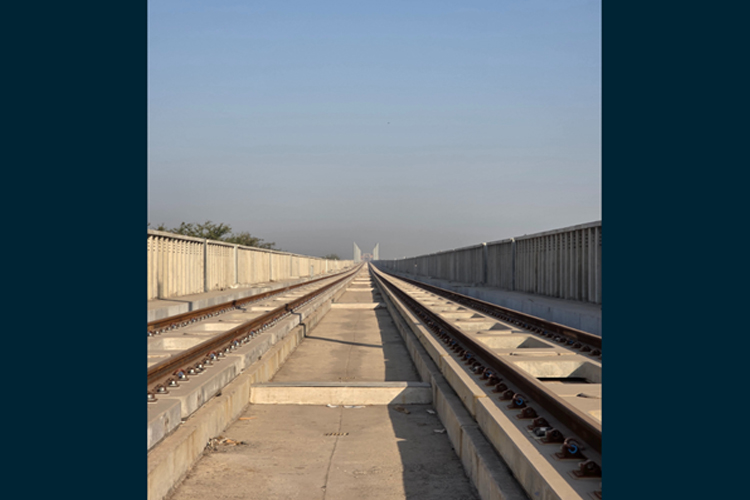
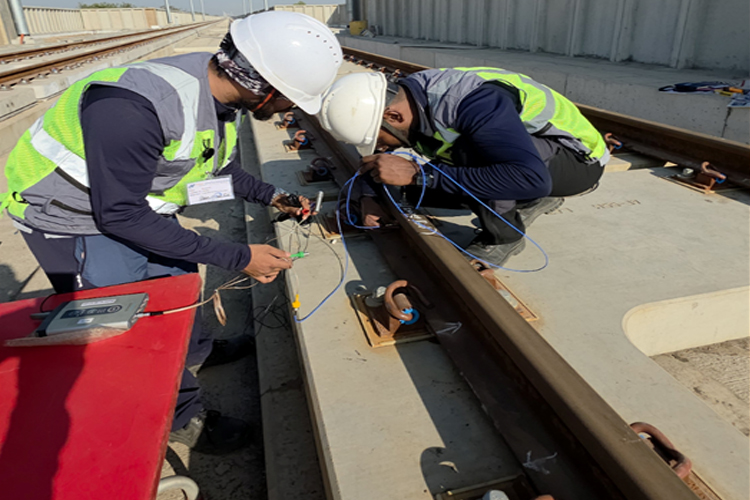
NV Dynamics was hired to conduct track decay rate assessments for an upcoming high speed rail corridor in India. The track decay measurement was carried out on a verified, uniform track section of 75m in accordance with BS EN 15461:2008+A1:2010 standard. The selected section was visually inspected to ensure that it satisfies the boundary conditions and requirements as per standard. Vibration response repeatability tests were conducted prior to decay measurements by performing the excitation using impact hammer and response measurements at select points. This test was conducted to ensure the repeatability of the vibration behavior along the section of track selected.
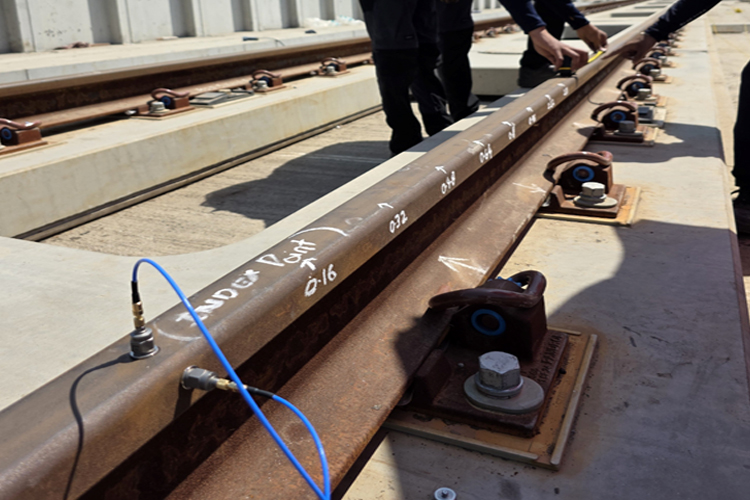
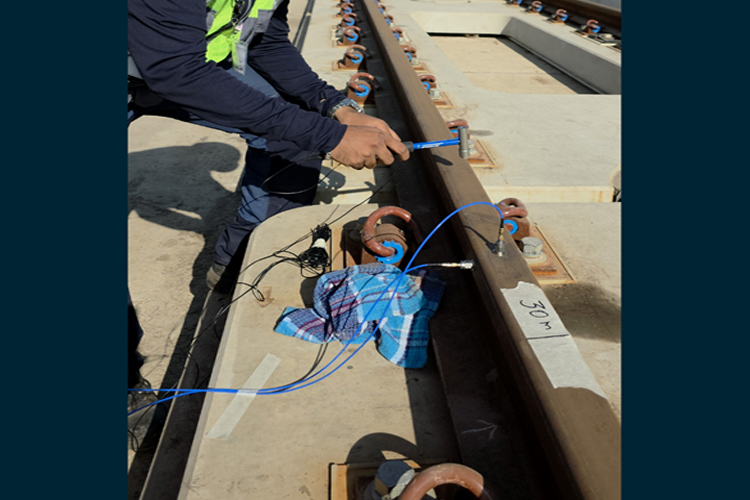
For the measurements, a reference location on the rail was selected and impact points were identified at different distances from this location, following the guidelines of the standard. At each point, multiple hammer impacts were applied in both vertical and horizontal directions of the rail and the responses were averaged to obtain reliable results.
Measurements were continued until the vibration levels reduced sufficiently compared to the reference location. The collected data was then processed to determine the vibration decay rate of the track.
© NV Dynamics. All Rights Reserved | Design by Webbuild